Your Health, We Care
Release date: 2026-07-22 17:05:07 Article From: Lucius Laos Recommended: 304
Rash and exfoliative skin reactions are highly characteristic adverse reactions of dacomitinib, and their incidence and severity are closely related to sun exposure, requiring proactive prevention and management.
(1) The overall incidence of rash is 78%, of which 21% are grade 3 or 4; exfoliative skin reactions (any grade) occur in 7%, with severe (grade 3/4) cases at 1.8%.
(2) Management principle: persistent grade 2 or any grade 3/4 skin reactions require dose interruption; after recovery to ≤ grade 1, resume at the same dose or a reduced dose depending on severity.
(3) Preventive measures include initiation of emollients and strict sun protection from the start of treatment; once grade 1 rash appears, topical antibiotics and corticosteroids may be added; for grade 2 or above, oral antibiotics (e.g., doxycycline or minocycline) should be initiated.
In addition to ILD and skin reactions, this product also affects multiple systems, and there are clear CYP2D6-mediated drug interactions.
(1) The most common (>20%) adverse reactions in descending order are: diarrhea (87%), rash (69%), paronychia (64%), stomatitis (45%), decreased appetite (31%), dry skin (30%), weight loss (26%), alopecia (23%), cough (21%), and pruritus (21%).
(2) Serious adverse reactions (≥1%) are mainly diarrhea (2.2%) and ILD (1.3%), requiring close monitoring.
(3) Drug interactions: avoid concomitant use with proton pump inhibitors (PPIs) because they significantly reduce dacomitinib concentrations; alternative local antacids or H2-receptor antagonists may be used, but dosing times must be staggered (at least 6 hours and 10 hours before and after H2-antagonist administration, respectively). Also, co-administration with CYP2D6 substrates may increase the toxicity of the latter, and concomitant use should be avoided especially when even a small increase in substrate concentration poses a serious risk.
For different physiological and pathological conditions, this product has clear recommendations or restrictions, with particular caution required in reproductive, elderly, and hepatically or renally impaired populations.
(1) Embryo-fetal toxicity: animal studies suggest potential fetal harm, so women of childbearing potential must use effective contraception during treatment and for at least 17 days after the last dose; use during pregnancy requires weighing benefits and risks and informing the patient of the risks.
(2) Lactation: because it may be excreted into breast milk and cause serious adverse reactions, breastfeeding should be suspended during treatment and for at least 17 days after the last dose.
(3) Elderly patients (≥65 years): exploratory analyses show a higher incidence of grade 3/4 adverse reactions and more frequent interruption or discontinuation due to AEs, requiring enhanced monitoring.
(4) Renal function: no dose adjustment is needed for mild or moderate impairment; no recommended dose is available for severe impairment (CLcr < 30 mL/min). Hepatic function: no dose adjustment is required for mild, moderate, or severe impairment (based on available data).
On November 21, 2025, the U.S. Food and Drug Administration (FDA) approved the regimen of pembrolizu···【more】
Recommended:8532025-17-12
Lung cancer is the most rapidly increasing malignant tumor with the fastest increasing morbidity and···【more】
Recommended:10502024-09-07
Recently, Lao Lucius Pharmaceutical (Lucius Pharmaceuticals) issued a solemn statement regarding cou···【more】
Recommended:3082026-10-10
Lucius Pharmaceuticals Version of Vibegron Now Available1.Basic Drug InformationVibegron (generic na···【more】
Recommended:4052026-06-08
In recent years, leveraging the World Trade Organization (WTO) patent waiver for least-developed cou···【more】
Recommended:5972026-05-08
How Can Chinese Patients Access Generic Drugs from Laos?In recent years, generic drugs from Laos hav···【more】
Recommended:5692026-04-08
Lucius Pharmaceuticals version of Ibrutinib is now availableIn a randomized controlled trial of 269 ···【more】
Recommended:4542026-03-08
Leveraging the WTO patent waiver for least-developed countries (extended to 2033), Laos has seen rap···【more】
Recommended:6072026-31-07
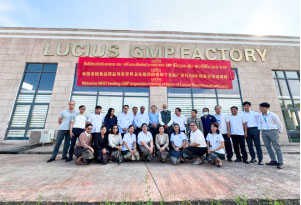
Lucius Pharmaceuticals (Lao) LTD. (Lucius Pharmaceuticals), with its manufacturing campus in Laos located in the capital city of Vientiane in 2020, officially begins its great journey to make effective and affordable medicines available to people in need around the world...More

Lucius Pharmaceutical Co., Ltd., was established in 2020 in Vientiane, the capital of Laos. It aims to offer safe, effective, and affordable medicines globally. With a factory spanning 25,000 square meters, the company manufactures 200+ generic drugs in diverse therapeutic fields.
Address: No.26 Thongmang village, Xaythany district, Vientiane Capital, Laos
E-mail:laoslucius@gmail.com

Name: Lucius

Telegram name: Vira
No.:0085253923643
Telegram name: Vira
No.:0085253923643