Your Health, We Care
Release date: 2024-08-05 16:35:14 Article From: Lucius Laos Recommended: 727
Non-small cell lung cancer (NSCLC) is the most common type of lung cancer, accounting for about 85% of all lung cancer cases. For patients with advanced or metastatic NSCLC, especially those whose disease progresses after platinum-based chemotherapy and immunotherapy, existing treatment options are still limited. There have been innovations in treatment methods, but the survival of patients is still not ideal. Against this background, many studies are devoted to exploring new treatment methods, one of which is antibody-drug conjugates (ADCs) - a new type of therapy that combines the targeting of antibodies with the cytotoxicity of chemotherapy drugs. This article will summarize the main findings of the EVOKE-01 study and explore the potential of sacituzummab govitecan, a new ADC, in the treatment of NSCLC.
The EVOKE-01 study is a global, randomized, open-label phase III clinical trial designed to evaluate the efficacy and safety of sacituzummab govitecan compared with the traditional chemotherapy drug docetaxel in the treatment of patients with advanced or metastatic NSCLC. The primary endpoint of the study was overall survival (OS), and secondary endpoints included progression-free survival (PFS), objective response rate (ORR), patient self-reported symptom assessment, and safety.
A total of 603 patients were enrolled in the study who had progressed after platinum chemotherapy and immune checkpoint inhibitors (PD-(L)1). The study randomly divided patients into two groups to receive sacituzummab govitecan (10 mg/kg intravenously on days 1 and 8 every 21 days) or docetaxel (75 mg/m2 intravenously on day 1 every 21 days). The study was stratified by different histological types, the best response of patients to the last PD-(L)1 treatment, and whether they had received treatment targeting actionable genetic mutations.
The results of the EVOKE-01 study showed that sacituzummab govitecan failed to achieve a statistically significant advantage in overall survival, but showed some improvement in survival numerically. Specifically, the median OS in the sacituzummab govitecan group was 11.1 months, while it was 9.8 months in the docetaxel group, and the risk of death was reduced by 16% (HR 0.84, 95% CI 0.68 to 1.04, one-sided p = 0.0534). This survival advantage was consistent across different histological types (squamous and non-squamous histology).
In terms of progression-free survival (PFS), there was little difference between the two groups (4.1 months vs. 3.9 months, HR 0.92, 95% CI 0.77 to 1.11), but in the patient's self-reported symptom assessment, the sacituzummab govitecan group had a longer time to symptom worsening, indicating that the drug has potential benefits for patients' quality of life.
In terms of safety, sacituzummab govitecan showed good tolerability, with a lower incidence of high-grade adverse events and a lower proportion of discontinuations or dose reductions due to treatment-related adverse events (TRAEs) than the docetaxel group. Specific data showed that 6.8% of patients in the sacituzummab govitecan group discontinued treatment due to TRAEs, while the proportion in the docetaxel group was 14.2%. In terms of treatment-related deaths, the proportions of the two groups were similar (1.4% and 1.0%, respectively).
These results show that sacituzummab govitecan not only has encouraging efficacy in the treatment of patients with advanced NSCLC, but also has good safety, and no new safety signals have emerged.
The results of the EVOKE-01 study showed the potential of sacituzummab govitecan in the treatment of advanced NSCLC, but there are also some limitations. The study failed to achieve statistical significance in overall survival (OS) and progression-free survival (PFS), which limits the clinical application prospects of sacituzummab govitecan to a certain extent. Secondary endpoints of the study, such as objective response rate (ORR), also did not show significant improvement, further weakening the overall efficacy impression of the drug.
The study authors and other experts in the field remain cautiously optimistic about the future use of sacituzummab govitecan in the treatment of NSCLC. Currently, studies are underway to combine sacituzummab govitecan with other treatments, such as the EVOKE-02 and EVOKE-03 studies, which will evaluate its combination with pembrolizumab (immunotherapy drug). By exploring these combination therapies, researchers hope to further improve the efficacy of sacituzummab govitecan in the treatment of NSCLC and overcome the limitations of monotherapy.
Overall, the EVOKE-01 study showed that sacituzummab govitecan has certain efficacy advantages in treating patients with advanced or metastatic NSCLC, especially when compared with the existing standard of care docetaxel. The study failed to meet all expected clinical endpoints, but its performance in terms of survival and safety remains interesting. Future studies will further evaluate the potential of the drug in combination with other therapies to provide more effective treatment options for NSCLC patients.
Lucius Pharmaceuticals Version of Vibegron Now Available1.Basic Drug InformationVibegron (generic name: vibegron) is an oral, once-daily β3-adrenergic receptor agonist approved by ···【more】
Recommended:397Release date: 2026-08-06
Lucius Pharmaceuticals version of Ibrutinib is now availableIn a randomized controlled trial of 269 previously untreated CLL/SLL patients aged 65 years and older, ibrutinib demonst···【more】
Recommended:443Release date: 2026-08-03
Alectinib Has Been Launched in LaosAlectinib is an oral targeted therapeutic drug belonging to the class of ALK inhibitors. Unlike traditional chemotherapy, it does not act by kill···【more】
Recommended:321Release date: 2026-07-30
Lucius Pharmaceuticals Quizartinib (Quizartinib) Has Been Launched(1) Quizartinib is an oral tablet. The recommended dose is once daily, one tablet per day (the specific dose is de···【more】
Recommended:336Release date: 2026-07-29
Lucius version of Dacomitinib is now availableCutaneous adverse reactions and management strategies for DacomitinibRash and exfoliative skin reactions are highly characteristic adv···【more】
Recommended:362Release date: 2026-07-21
Lao PDR: Filgotinib Has Been LaunchedBefore initiating filgotinib treatment, strict screening for the following contraindications is mandatory; the presence of any one of these con···【more】
Recommended:343Release date: 2026-07-13
Lucius Pharmaceuticals' Pirtobrutinib Has Been LaunchedPirtobrutinib is an oral anticancer drug whose active ingredient is pirtobrutinib, belonging to the class of Bruton's···【more】
Recommended:370Release date: 2026-07-10
Lucius Pharmaceuticals (Lao) Co., Ltd. has launched a generic version of elagolix sodium (trade name LuciElag) for the treatment of moderate to severe pain associated with endometr···【more】
Recommended:376Release date: 2026-07-06
Contraindications for Bempedoic Acid (Nilemdo)Bempedoic acid (Nilemdo) is strictly contraindicated in the following situations: ①hypersensitivity to bempedoic acid or any excipient···【more】
Recommended:347Release date: 2026-07-03
MONDAY, June 15, 2026 — A study published online June 8 in Nature Medicine has found that apitegromab, through its selective inhibition of myostatin, can maintain lean body mass wh···【more】
Recommended:443Release date: 2026-06-24
On May 28, 2026, AstraZeneca announced that its immunotherapy drug Imfinzi (durvalumab) in combination with BCG (Bacillus Calmette-Guérin) induction and maintenance regimen has rec···【more】
Recommended:520Release date: 2026-06-01
On November 21, 2025, the U.S. Food and Drug Administration (FDA) approved the regimen of pembrolizumab (Keytruda, Merck & Co., Inc.) or pembrolizumab and berahyaluronidase alf···【more】
Recommended:847Release date: 2025-12-17
Dr. Louis, a microbiologist at the World Health Organization (WHO), recently made a technical visit to Lucius Pharmaceuticals in Laos. The purpose of the visit was to learn more ab···【more】
Recommended:1105Release date: 2024-07-09
Lung cancer is the most rapidly increasing malignant tumor with the fastest increasing morbidity and mortality, which has been troubling medical workers. Clinical studies have foun···【more】
Recommended:1044Release date: 2024-07-09
Recently, Lao Lucius Pharmaceutical (Lucius Pharmaceuticals) issued a solemn statement regarding counterfeit products bearing its brand and imitation anti-counterfeiting websites a···【more】
Recommended:276Release date: 2026-10-10
In recent years, leveraging the World Trade Organization (WTO) patent waiver for least-developed countries (extended to July 1, 2033), Laos has been legally permitted to produce ge···【more】
Recommended:587Release date: 2026-08-05
How Can Chinese Patients Access Generic Drugs from Laos?In recent years, generic drugs from Laos have gradually entered the view of Chinese cancer and chronic disease patients due ···【more】
Recommended:551Release date: 2026-08-04
Leveraging the WTO patent waiver for least-developed countries (extended to 2033), Laos has seen rapid growth in its generic pharmaceutical industry in recent years. Lucius Pharmac···【more】
Recommended:602Release date: 2026-07-31
Lucius Pharmaceutical is a modern pharmaceutical enterprise headquartered in Vientiane, the capital of Laos. The company was established in 2020, with its R&D and operational s···【more】
Recommended:422Release date: 2026-07-28
Lucius Pharmaceuticals Relocates from India to Laos: A Five-Year Development Journey of a Generic Drug CompanyRelocation Background and Strategic ShiftLucius Pharmaceuticals was fo···【more】
Recommended:657Release date: 2026-07-24
In recent years, Laos has gradually become a major global supply source for generic drugs, leveraging the WTO-granted patent exemption for least-developed countries. Among them, Lu···【more】
Recommended:420Release date: 2026-07-22
Company Overview: Industrial Migration from India to LaosLucius Pharmaceuticals (Laos) Co., Ltd. was established in 2020, with its headquarters located at No. 26, Thongmang Village···【more】
Recommended:491Release date: 2026-07-20
Lucius Pharmaceutical is one of the representative generic drug enterprises in Laos. The company was established in Vientiane, the capital of Laos, in 2020 and has been in operatio···【more】
Recommended:474Release date: 2026-07-17
Industrial Rise: From Zero to a "World Pharmacy" CandidateThe explosive growth of Laos' generic drug industry is rooted in unique international rule dividends. As a U···【more】
Recommended:581Release date: 2026-07-16
In recent years, Laos generic drugs have gradually come into view of oncology and chronic disease patients in China due to their significant price advantage. Leveraging the WTO pat···【more】
Recommended:399Release date: 2026-07-15
Regulatory System: From "One Ministry, One Department" to Legal AmendmentsLao drug regulation adopts a centralized "one ministry, one department" management mod···【more】
Recommended:540Release date: 2026-07-14
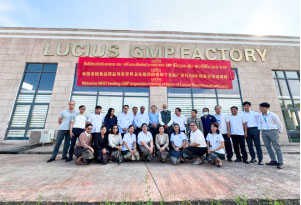
Lucius Pharmaceuticals (Lao) LTD. (Lucius Pharmaceuticals), with its manufacturing campus in Laos located in the capital city of Vientiane in 2020, officially begins its great journey to make effective and affordable medicines available to people in need around the world...More

Lucius Pharmaceutical Co., Ltd., was established in 2020 in Vientiane, the capital of Laos. It aims to offer safe, effective, and affordable medicines globally. With a factory spanning 25,000 square meters, the company manufactures 200+ generic drugs in diverse therapeutic fields.
Address: No.26 Thongmang village, Xaythany district, Vientiane Capital, Laos
E-mail:laoslucius@gmail.com

Name: Lucius

Telegram name: Vira
No.:0085253923643
Telegram name: Vira
No.:0085253923643