Your Health, We Care
Release date: 2024-11-26 15:29:30 Article From: Lucius Laos Recommended: 603
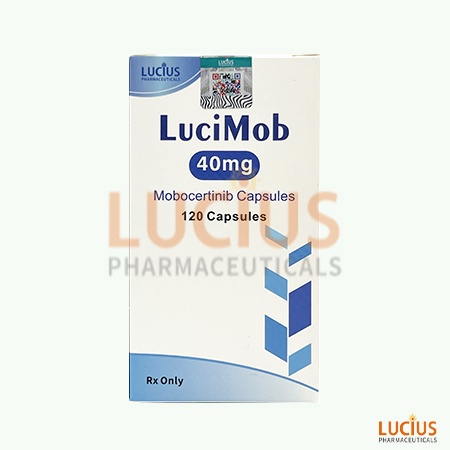
· Starting dose: 60 mg on days 1 and 3 of each week (120 mg total per week).
· First dose reduction: If dose reduction is necessary, reduce the dose to 40 mg on days 1 and 3 of each week (80 mg total per week).
· Second dose reduction: Further reduce to only once a week at a dose of 60 mg.
· Third dose reduction: Reduce again to once a week at a dose of 40 mg.
· Fourth dose reduction: If still not tolerated, consider permanent discontinuation of treatment.
Dose adjustment for hematological adverse reactions:
· Platelet count between 50,000 and 75,000/mcL: If any adverse reaction occurs, interrupt the drug for one dose and restart at the original dose.
· Platelet count between 25,000 and 50,000/mcL without bleeding: At first occurrence, interrupt treatment and monitor until platelet count recovers to at least 50,000/mcL, then reduce by one dose level.
· Platelet count between 25,000 and 50,000/mcL with bleeding: Immediately interrupt treatment, monitor platelet count until recovery to at least 50,000/mcL, and restart at one-level lower dose after bleeding resolves, while considering platelet transfusions per medical guidelines.
· Platelet count below 25,000/mcL: Immediately interrupt treatment and continue monitoring until platelet count recovers to at least 50,000/mcL, then restart treatment at one-level lower dose, while administering platelet transfusions as needed.
· Absolute neutrophil count between 0.5 and 1 x 10(9)/L, afebrile: interrupt treatment at first occurrence, monitor until neutrophil count recovers to 1 x
10(9)/L or greater, then restart at original dose. If recurrence occurs, interrupt treatment, monitor until neutrophil count recovers, administer growth factors as directed, then restart at one-step lower dose.
· Absolute neutrophil count less than 0.5 x 10(9)/L or febrile neutropenia: interrupt treatment immediately, monitor until neutrophil count recovers to 1 x
10(9)/L, then restart at one-step lower dose.
· Hemoglobin less than 8 g/dL: In all cases, reduce dose by one level and consider transfusion as directed.
· If life-threatening anemia occurs: treatment should be interrupted immediately and hemoglobin levels should be continuously monitored until it returns to 8g/dL or above, then treatment should be restarted at a lower dose, with blood transfusions as needed.
· Grade 1 or 2 nausea (manifested by reduced oral intake, but without significant weight loss, dehydration, or malnutrition) or grade 1 or 2 vomiting (vomiting 5 times or less per day): When these symptoms occur, treatment should be continued and anti-nausea drugs should be added.
· Grade 3 nausea (inadequate oral caloric or fluid intake) or grade 3 or higher vomiting (vomiting 6 times or more per day): Once these symptoms occur, treatment should be interrupted immediately; continue to monitor until nausea or vomiting is relieved to grade 2 or lower, or returns to baseline levels; add anti-nausea drugs; then restart treatment with a regimen that is reduced by 1 dose level.
· Grade 2 diarrhea (4 to 6 bowel movements per day compared to baseline): When it first occurs, continue treatment and provide supportive care; if it recurs, reduce the dose by 1 level and provide supportive care.
· Grade 3 or higher diarrhea (7 or more bowel movements per day compared to baseline, requiring hospitalization): Once it occurs, interrupt treatment immediately and provide supportive care; continue to monitor until diarrhea resolves to Grade 2 or lower; then restart treatment at a dose level reduced by 1 level.
· Weight loss of 10% to 20%, or anorexia with significant weight loss or malnutrition: Once these symptoms occur, interrupt treatment and provide supportive care; continue to monitor until weight returns to more than 90% of baseline weight; then restart treatment at a dose level reduced by 1 level.
· Sodium level drops to 130mmol/L or below: Once it occurs, treatment should be interrupted immediately and supportive care should be provided; continue to monitor until the sodium level returns to 130mmol/L or above; then restart treatment at a dose level lower.
· Grade 2 fatigue lasting more than 7 days or reaching grade 3 fatigue: Once these symptoms occur, treatment should be interrupted; continue to monitor until fatigue is relieved to grade 1 or returns to baseline levels; then restart treatment at a dose level lower.
· Grade 2 ocular toxicity (excluding cataracts): Once it occurs, an ophthalmological evaluation should be performed, treatment should be interrupted and supportive care should be provided; continue to monitor until ocular symptoms are relieved to grade 1 or return to baseline levels; then restart treatment at a dose level lower.
· Grade 3 or higher ocular toxicity (excluding cataracts): Once it occurs, treatment should be permanently discontinued and an ophthalmological evaluation should be performed.
· Grade 3 or 4 (life-threatening) adverse reactions: If they occur, treatment should be interrupted immediately; continue to monitor until symptoms are relieved to grade 2 or lower; then restart treatment with a dose-reduced regimen.
On November 21, 2025, the U.S. Food and Drug Administration (FDA) approved the regimen of pembrolizu···【more】
Recommended:8472025-17-12
Lung cancer is the most rapidly increasing malignant tumor with the fastest increasing morbidity and···【more】
Recommended:10442024-09-07
Recently, Lao Lucius Pharmaceutical (Lucius Pharmaceuticals) issued a solemn statement regarding cou···【more】
Recommended:2762026-10-10
Lucius Pharmaceuticals Version of Vibegron Now Available1.Basic Drug InformationVibegron (generic na···【more】
Recommended:3972026-06-08
In recent years, leveraging the World Trade Organization (WTO) patent waiver for least-developed cou···【more】
Recommended:5872026-05-08
How Can Chinese Patients Access Generic Drugs from Laos?In recent years, generic drugs from Laos hav···【more】
Recommended:5512026-04-08
Lucius Pharmaceuticals version of Ibrutinib is now availableIn a randomized controlled trial of 269 ···【more】
Recommended:4432026-03-08
Leveraging the WTO patent waiver for least-developed countries (extended to 2033), Laos has seen rap···【more】
Recommended:6022026-31-07

Lucius Pharmaceuticals (Lao) LTD. (Lucius Pharmaceuticals), with its manufacturing campus in Laos located in the capital city of Vientiane in 2020, officially begins its great journey to make effective and affordable medicines available to people in need around the world...More

Lucius Pharmaceutical Co., Ltd., was established in 2020 in Vientiane, the capital of Laos. It aims to offer safe, effective, and affordable medicines globally. With a factory spanning 25,000 square meters, the company manufactures 200+ generic drugs in diverse therapeutic fields.
Address: No.26 Thongmang village, Xaythany district, Vientiane Capital, Laos
E-mail:laoslucius@gmail.com

Name: Lucius

Telegram name: Vira
No.:0085253923643
Telegram name: Vira
No.:0085253923643