Your Health, We Care
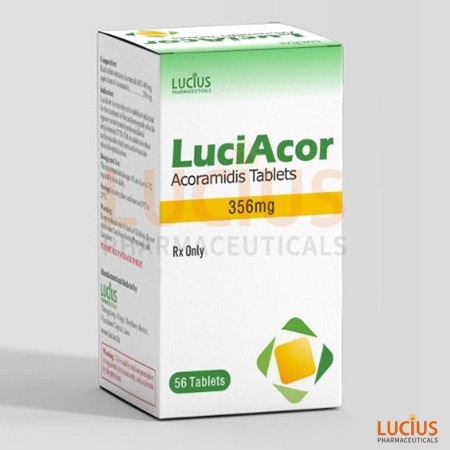
Another NameAttruby、阿考米迪
Indications
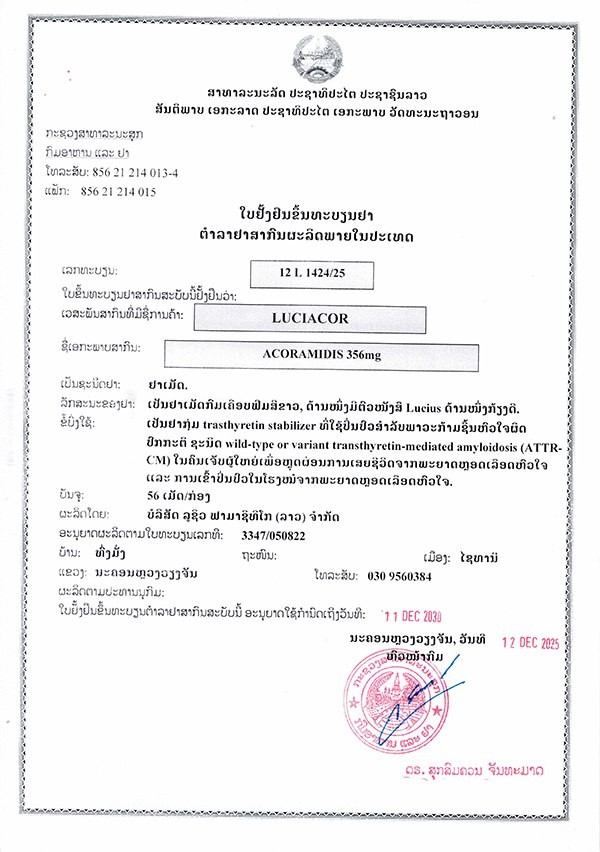
Indicated for adult patients with wild-type or variant transthyretin-mediated amyloid cardiomyopathy (ATTR-CM) to reduce cardiovascular death and cardiovascular-related hospitalization.
Specs

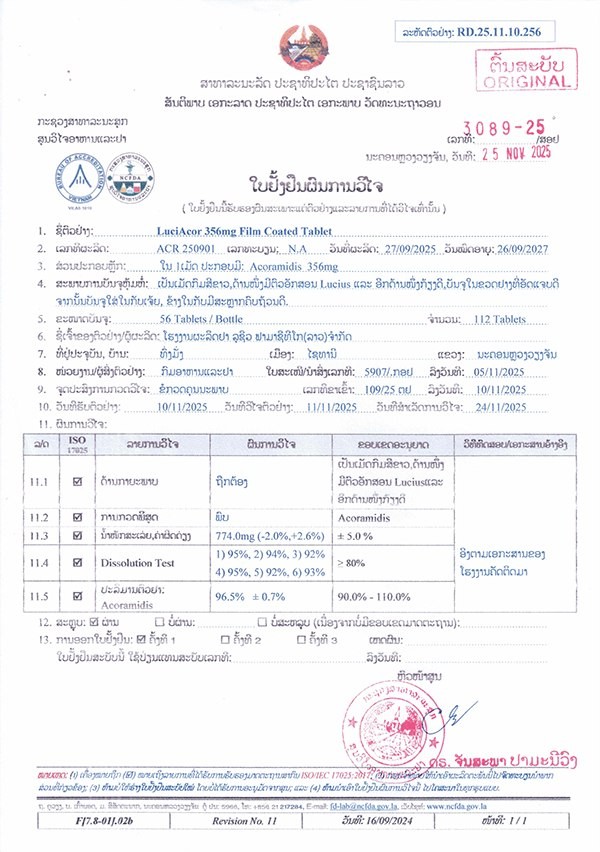
Factory:Lucius Pharmaceuticals
Reg No.:12 L 1424/25
Inspection No.:3089-25
Dosage form:Tablet
Indate:24 months
Acoramidis (LuciAcor) is a transthyretin (TTR) stabilizer supplied as oral tablets for adult use; its safety and efficacy in pediatric patients have not been established.
Acoramidis (LuciAcor) is administered orally, with or without food. Swallow tablets whole; do not cut, crush, or chew.
The recommended dosage is 712 mg orally twice daily.
None.
1. Pregnancy: Available data on the use of Acoramidis in pregnant women are insufficient to determine drug-associated risks of major birth defects, miscarriage, or other adverse maternal or fetal outcomes.
2. Lactation: There are no data on the presence of Acoramidis in human or animal milk, or on the effects of the drug on the breastfed infant or on milk production.
3. Pediatric Use: The safety and efficacy of this product in pediatric patients have not been established.
4. Geriatric Use: No dose adjustment is required in geriatric patients (≥65 years of age).
5. Hepatic Impairment: The effect of hepatic impairment (Child-Pugh Class A, B, or C) on the pharmacokinetics of Acoramidis has not been established.
6. Renal Impairment: No clinically meaningful differences in the pharmacokinetics of Acoramidis were observed based on renal impairment; no dose adjustment is required.
1. Overall: Discontinuation of study drug due to adverse events occurred in 9.3% of the Acoramidis group and 8.5% of the placebo group.
2. Gastrointestinal adverse reactions: Most were mild and resolved without discontinuation. Monitor for gastrointestinal symptoms such as diarrhea and upper abdominal pain during treatment; most are mild and self-limiting. If symptoms persist or worsen and affect food intake or volume status, inform the physician immediately.
3. Increased serum creatinine and decreased eGFR: Monitor serum creatinine and eGFR during treatment, noting that these changes generally occur within 4 weeks and then stabilize; if clinically meaningful worsening of renal function indicators occurs, evaluate other causes and consider whether to discontinue the drug.
4. Decreased free thyroxine: Acoramidis (LuciAcor) may decrease serum free thyroxine concentrations without accompanying changes in thyroid-stimulating hormone (TSH). Monitor free thyroxine during treatment; interpret thyroid function results in the context of whether TSH changes concurrently. When free thyroxine is decreased without a corresponding change in TSH, consider this a pharmacodynamic effect related to this product.
5. Exposure changes due to drug interactions: Concomitant use with UGT inducers or strong CYP3A inducers may decrease Acoramidis exposure; Acoramidis (LuciAcor) inhibits CYP2C9, and concomitant use with sensitive CYP2C9 substrates may increase the concentrations of those substrates.
1. UGT inducers and strong CYP3A inducers: Acoramidis is metabolized via UGT enzyme-mediated glucuronidation. Concomitant use of UGT inducers may decrease Acoramidis exposure. Although Acoramidis is not metabolized by CYP3A, strong CYP3A inducers can also induce UGT enzymes. Avoid concomitant use of this product with UGT inducers and strong CYP3A inducers.
2. Sensitive CYP2C9 substrates: Acoramidis inhibits CYP2C9, which may lead to increased concentrations of CYP2C9 substrates when these drugs are coadministered. When this product is used concomitantly with sensitive CYP2C9 substrates, consider more frequent monitoring of patients for increased exposure (e.g., signs of exposure-related toxicity).
3. Dosage adjustment for concomitant use with drugs affecting hepatic microsomal enzymes: Avoid concomitant use. Avoid concomitant use of Acoramidis (LuciAcor) with uridine diphosphate glucuronosyltransferase (UGT) inducers and strong CYP3A inducers.
1. Regarding cytochrome P450 enzymes, Acoramidis is a time-dependent inhibitor of CYP2C9 but does not inhibit CYP1A2, CYP2B6, CYP2C8, CYP2C19, CYP2D6, or CYP3A4/5; Acoramidis does not induce CYP1A2, CYP2B6, or CYP3A4.
2. Regarding UGT, Acoramidis is a substrate of multiple UGT enzymes (including UGT1A9, UGT1A1, and UGT2B7).
3. Regarding transporter systems, Acoramidis is a substrate of OAT1 and breast cancer resistance protein (BCRP); Acoramidis inhibits OAT1 and OAT3 but does not inhibit MATE1, OCT1, OCT2, OATP1B1, OATP1B3, MATE2-K, BCRP, P-gp, or BSEP.
Target and Selectivity: Acoramidis is a selective stabilizer of transthyretin (TTR).
Binding Mode: Acoramidis binds to TTR at the thyroxine binding site, slowing the dissociation of the TTR tetramer into its constituent monomers, which is the rate-limiting step in amyloidogenesis.
Downstream Pathway: By stabilizing the TTR tetramer, it inhibits downstream processes of amyloidogenesis.

Lucius Pharmaceuticals (Lao) LTD. (Lucius Pharmaceuticals), with its manufacturing campus in Laos located in the capital city of Vientiane in 2020, officially begins its great journey to make effective and affordable medicines available to people in need around the world...More

Lucius Pharmaceutical Co., Ltd., was established in 2020 in Vientiane, the capital of Laos. It aims to offer safe, effective, and affordable medicines globally. With a factory spanning 25,000 square meters, the company manufactures 200+ generic drugs in diverse therapeutic fields.
Address: No.26 Thongmang village, Xaythany district, Vientiane Capital, Laos
E-mail:laoslucius@gmail.com
Name: Lucius

Telegram name: Vira
No.:0085253923643
Telegram name: Vira
No.:0085253923643