Your Health, We Care
Release date: 2026-03-31 17:09:26 Article From: Lucius Laos Recommended: 256
The recommended dosage of asciminib should be determined through comprehensive evaluation based on factors including the patient's disease phase (e.g., chronic phase or accelerated phase), response to prior therapy, presence of specific gene mutations (e.g., T315I mutation), and tolerability.
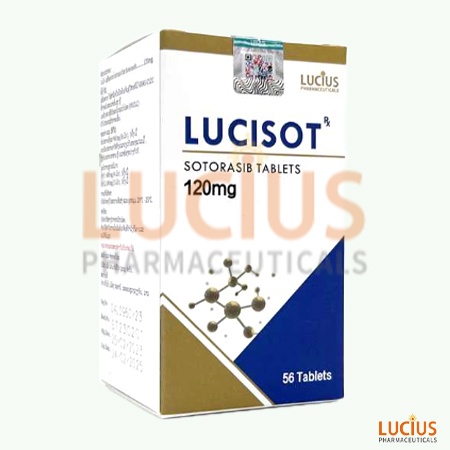
Recommended dosage: 80 mg orally once daily, or 40 mg orally every 12 hours.
Duration of treatment: Continue therapy as long as clinical benefit is observed until unacceptable toxicity occurs.
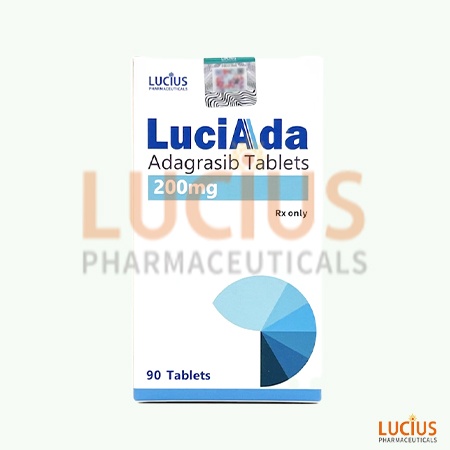
Recommended dosage: 200 mg orally every 12 hours.
Mild to severe renal impairment (eGFR 15–89 mL/min/1.73 m²): No dosage adjustment required.
End-stage renal disease (eGFR <15 mL/min/1.73 m²): No relevant data available.
Mild to severe hepatic impairment: No dosage adjustment required.
First dose reduction: 40 mg orally once daily, or 20 mg orally twice daily.
Subsequent dose reduction: Permanently discontinue treatment in patients unable to tolerate the reduced dosage.
First dose reduction: 160 mg orally twice daily.
Subsequent dose reduction: Permanently discontinue treatment in patients unable to tolerate the reduced dosage.
When absolute neutrophil count (ANC) <1 × 10⁹/L and/or platelet count (PLT) <50 × 10⁹/L:
Interrupt treatment until ANC recovers to ≥1 × 10⁹/L and/or PLT recovers to ≥50 × 10⁹/L.
If recovery occurs within 2 weeks: Resume treatment at the starting dosage.
If recovery takes longer than 2 weeks: Resume treatment at the reduced dosage.
For recurrent severe thrombocytopenia and/or neutropenia, interrupt treatment until ANC ≥1 × 10⁹/L and PLT ≥50 × 10⁹/L, then resume treatment at the reduced dosage.
When elevation >2 × upper limit of normal (ULN):
Interrupt treatment until levels recover to <1.5 × ULN.
If recovery occurs: Resume treatment at the reduced dosage; if the event recurs after dose reduction, permanently discontinue treatment.
If no recovery: Permanently discontinue treatment and perform diagnostic testing to rule out pancreatitis.
For adverse reactions of Grade 3 or higher:
Interrupt treatment until recovery to Grade 1 or lower.
If recovery occurs: Resume treatment at the reduced dosage.
If no recovery: Permanently discontinue treatment.
On November 21, 2025, the U.S. Food and Drug Administration (FDA) approved the regimen of pembrolizu···【more】
Recommended:8462025-17-12
Lung cancer is the most rapidly increasing malignant tumor with the fastest increasing morbidity and···【more】
Recommended:10442024-09-07
Recently, Lao Lucius Pharmaceutical (Lucius Pharmaceuticals) issued a solemn statement regarding cou···【more】
Recommended:2692026-10-10
Lucius Pharmaceuticals Version of Vibegron Now Available1.Basic Drug InformationVibegron (generic na···【more】
Recommended:3952026-06-08
In recent years, leveraging the World Trade Organization (WTO) patent waiver for least-developed cou···【more】
Recommended:5852026-05-08
How Can Chinese Patients Access Generic Drugs from Laos?In recent years, generic drugs from Laos hav···【more】
Recommended:5502026-04-08
Lucius Pharmaceuticals version of Ibrutinib is now availableIn a randomized controlled trial of 269 ···【more】
Recommended:4412026-03-08
Leveraging the WTO patent waiver for least-developed countries (extended to 2033), Laos has seen rap···【more】
Recommended:6012026-31-07
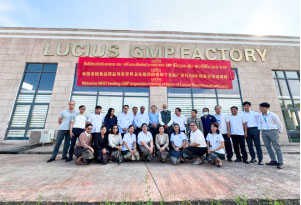
Lucius Pharmaceuticals (Lao) LTD. (Lucius Pharmaceuticals), with its manufacturing campus in Laos located in the capital city of Vientiane in 2020, officially begins its great journey to make effective and affordable medicines available to people in need around the world...More

Lucius Pharmaceutical Co., Ltd., was established in 2020 in Vientiane, the capital of Laos. It aims to offer safe, effective, and affordable medicines globally. With a factory spanning 25,000 square meters, the company manufactures 200+ generic drugs in diverse therapeutic fields.
Address: No.26 Thongmang village, Xaythany district, Vientiane Capital, Laos
E-mail:laoslucius@gmail.com

Name: Lucius

Telegram name: Vira
No.:0085253923643
Telegram name: Vira
No.:0085253923643