Your Health, We Care
Release date: 2026-04-14 17:39:10 Article From: Lucius Laos Recommended: 256
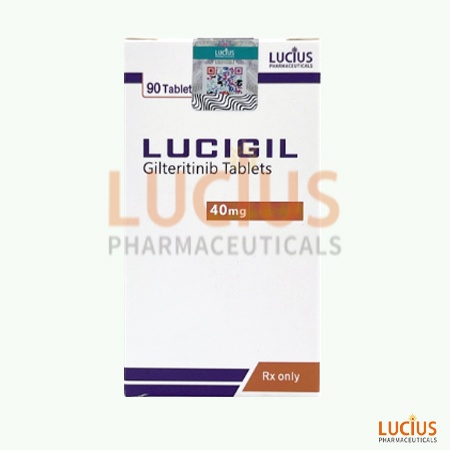
In patients with acute myeloid leukemia (AML), the bone marrow produces a large number of abnormal white blood cells. These cells cannot perform normal immune functions and instead crowd out healthy blood cells. Gilteritinib, as a targeted therapy, selectively blocks the activity of certain enzymes called tyrosine kinases. These kinases are key signaling molecules that abnormal leukemia cells rely on for proliferation and survival. By inhibiting these kinases, gilteritinib effectively stops the growth and spread of cancer cells, thereby controlling disease progression. Unlike traditional chemotherapy, this targeted treatment acts more precisely on cancer cells, reducing damage to normal cells.
Gilteritinib is a prescription medicine used to treat adult patients with acute myeloid leukemia. It belongs to a class of anticancer drugs known as protein kinase inhibitors. Its active ingredient is gilteritinib. The drug is typically used for patients whose leukemia is associated with an FLT3 gene mutation and whose disease has relapsed or has not improved after previous treatment. Gilteritinib is administered as an oral tablet, with each tablet containing 40 mg of gilteritinib (as the fumarate salt). Other ingredients include mannitol, hydroxypropyl cellulose, magnesium stearate, titanium dioxide, etc. The tablets are round, pale yellow, film-coated.
Gilteritinib is specifically indicated for the treatment of adult patients with acute myeloid leukemia who carry an FLT3 gene mutation. FLT3 mutation is one of the most common genetic mutations in AML and is associated with rapid disease progression and high relapse rates. Specifically, gilteritinib is suitable for two types of patients: those whose disease has relapsed after initial treatment, and those who did not achieve adequate remission (i.e., refractory disease) from prior therapy. Before starting gilteritinib, doctors typically use a specialized genetic test to confirm the presence of an FLT3 mutation. This drug is not recommended for children and adolescents under 18 years of age, as its safety and efficacy have not been established in this age group.
On November 21, 2025, the U.S. Food and Drug Administration (FDA) approved the regimen of pembrolizu···【more】
Recommended:8462025-17-12
Lung cancer is the most rapidly increasing malignant tumor with the fastest increasing morbidity and···【more】
Recommended:10442024-09-07
Recently, Lao Lucius Pharmaceutical (Lucius Pharmaceuticals) issued a solemn statement regarding cou···【more】
Recommended:2672026-10-10
Lucius Pharmaceuticals Version of Vibegron Now Available1.Basic Drug InformationVibegron (generic na···【more】
Recommended:3932026-06-08
In recent years, leveraging the World Trade Organization (WTO) patent waiver for least-developed cou···【more】
Recommended:5822026-05-08
How Can Chinese Patients Access Generic Drugs from Laos?In recent years, generic drugs from Laos hav···【more】
Recommended:5482026-04-08
Lucius Pharmaceuticals version of Ibrutinib is now availableIn a randomized controlled trial of 269 ···【more】
Recommended:4392026-03-08
Leveraging the WTO patent waiver for least-developed countries (extended to 2033), Laos has seen rap···【more】
Recommended:6002026-31-07
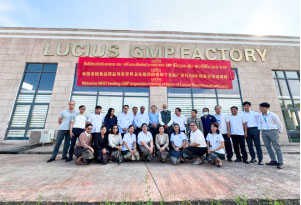
Lucius Pharmaceuticals (Lao) LTD. (Lucius Pharmaceuticals), with its manufacturing campus in Laos located in the capital city of Vientiane in 2020, officially begins its great journey to make effective and affordable medicines available to people in need around the world...More

Lucius Pharmaceutical Co., Ltd., was established in 2020 in Vientiane, the capital of Laos. It aims to offer safe, effective, and affordable medicines globally. With a factory spanning 25,000 square meters, the company manufactures 200+ generic drugs in diverse therapeutic fields.
Address: No.26 Thongmang village, Xaythany district, Vientiane Capital, Laos
E-mail:laoslucius@gmail.com

Name: Lucius

Telegram name: Vira
No.:0085253923643
Telegram name: Vira
No.:0085253923643