Your Health, We Care
Release date: 2026-04-08 16:48:32 Article From: Lucius Laos Recommended: 279
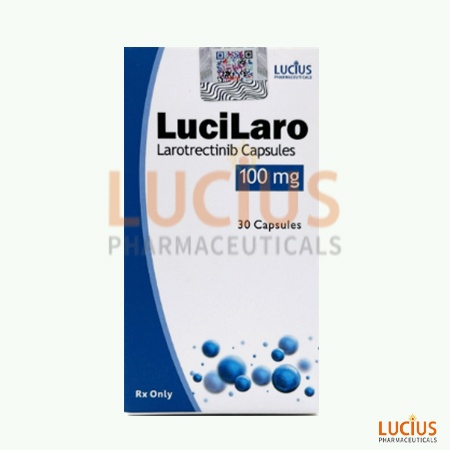
Larotrectinib is a prescription medication used to treat solid tumors (cancers) in adults and children. These tumors must be caused by certain abnormal NTRK genes, have already spread, or be in a location where surgical removal could lead to severe complications. Additionally, patients must have no other acceptable treatment options, or the cancer continues to grow or spread after other treatments. Your healthcare provider will perform tests to determine whether larotrectinib is right for you. As an oral medication, larotrectinib is not chemotherapy, offering patients a more convenient treatment approach.
Larotrectinib is the first drug specifically designed to block TRK fusion proteins. In some cancers, the NTRK gene abnormally connects or fuses with another gene, leading to the continuous production of TRK fusion proteins. These proteins send growth signals to cancer cells, promoting tumor development. Larotrectinib is thought to work by blocking these proteins and shutting down the abnormal signals, thereby stopping cancer cell growth—though its exact mechanism of action is not fully understood. Importantly, as long as the tumor is driven by an NTRK gene fusion, larotrectinib can be effective across multiple types of solid tumors, regardless of where in the body the tumor is located.
Multiple clinical trials have demonstrated the efficacy of larotrectinib. In three clinical trials involving 339 adults and children with TRK fusion cancers, a total of 204 patients responded to treatment, yielding an overall response rate of 60%. Response was defined as tumor shrinkage or complete disappearance. Among these, 24% of patients (83 individuals) achieved a complete response, meaning large tumors shrank enough to be surgically removed or disappeared entirely; another 36% of patients (121 individuals) achieved a partial response, with target tumor size reduced by more than 30%. Among patients who responded, the median duration of response was 43.3 months, ranging from over 0.0 months to over 73.7 months. Notably, 64% of patients maintained their response for more than 12 months, and 45% for more than 24 months. The median time to response was only 2.22 months.
On November 21, 2025, the U.S. Food and Drug Administration (FDA) approved the regimen of pembrolizu···【more】
Recommended:8462025-17-12
Lung cancer is the most rapidly increasing malignant tumor with the fastest increasing morbidity and···【more】
Recommended:10442024-09-07
Recently, Lao Lucius Pharmaceutical (Lucius Pharmaceuticals) issued a solemn statement regarding cou···【more】
Recommended:2672026-10-10
Lucius Pharmaceuticals Version of Vibegron Now Available1.Basic Drug InformationVibegron (generic na···【more】
Recommended:3932026-06-08
In recent years, leveraging the World Trade Organization (WTO) patent waiver for least-developed cou···【more】
Recommended:5822026-05-08
How Can Chinese Patients Access Generic Drugs from Laos?In recent years, generic drugs from Laos hav···【more】
Recommended:5482026-04-08
Lucius Pharmaceuticals version of Ibrutinib is now availableIn a randomized controlled trial of 269 ···【more】
Recommended:4392026-03-08
Leveraging the WTO patent waiver for least-developed countries (extended to 2033), Laos has seen rap···【more】
Recommended:6002026-31-07
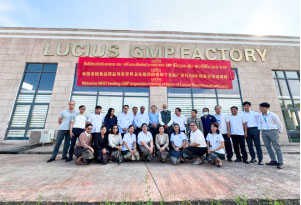
Lucius Pharmaceuticals (Lao) LTD. (Lucius Pharmaceuticals), with its manufacturing campus in Laos located in the capital city of Vientiane in 2020, officially begins its great journey to make effective and affordable medicines available to people in need around the world...More

Lucius Pharmaceutical Co., Ltd., was established in 2020 in Vientiane, the capital of Laos. It aims to offer safe, effective, and affordable medicines globally. With a factory spanning 25,000 square meters, the company manufactures 200+ generic drugs in diverse therapeutic fields.
Address: No.26 Thongmang village, Xaythany district, Vientiane Capital, Laos
E-mail:laoslucius@gmail.com

Name: Lucius
Telegram name: Vira
No.:0085253923643
Telegram name: Vira
No.:0085253923643