Your Health, We Care
Release date: 2026-04-07 15:26:56 Article From: Lucius Laos Recommended: 257
If you have chronic GVHD, close collaboration with your healthcare team is the cornerstone of achieving the best possible outcome. First, be sure to take belumosudil as prescribed—do not stop or reduce the dose on your own because you feel better or experience side effects. Clinical studies have shown that nearly all patients who respond to treatment do so within the first 24 weeks of therapy, though some with severe fibrosis may require longer. Therefore, it is very important to give the medication enough time to work. Second, proactively inform your doctor about any side effects or discomfort you experience, even if you think they “might not matter.” Your doctor can help adjust the dose, add supportive medications, or change how you take the drug (e.g., taking it with food to reduce nausea), thereby improving your tolerability. Third, if you have concerns about fertility, are planning a pregnancy, or worry about how the drug may affect your future, discuss these openly with your doctor—they can provide professional advice. Finally, remember to tell your doctor about all other medications you are using, including over‑the‑counter drugs, vitamins, and herbal products, to avoid potential interactions.
Chronic GVHD is not only a physical illness; it also profoundly affects patients’ psychological state and daily life. Many patients describe feeling “imprisoned by the disease,” because persistent fatigue, pain, changes in appearance (such as skin hardening and pigmentation), and repeated medical visits gradually erode one’s energy and confidence. Chronic GVHD can lead to reduced ability to perform daily tasks—simple actions like dressing, eating, and walking may become difficult. Living in this state for a long time, patients are prone to anxiety, depression, social isolation, and other psychological problems. Therefore, effective disease management must go beyond medication alone and encompass psychological support and lifestyle adjustments. Management strategies should be individualized based on the specific organs involved, the severity of symptoms, and the extent to which daily life is affected. For example, patients with skin involvement need enhanced skin care and should avoid excessive sun exposure; those with oral involvement may need to adjust food texture and choose soft, non‑irritating foods; those with joint stiffness may require physical therapy or rehabilitation exercises.
Chronic GVHD is called a “systemic” disease because it can affect almost any part of the body. The skin is one of the most commonly involved organs; patients may experience various types of rash, uneven skin pigmentation, thickening, or even hardening and tightness. These changes not only affect appearance but can also cause persistent itching or pain. In the oral cavity, patients often feel dry mucosa, sensitivity to irritation, and abnormal reactions to temperature or taste when eating; in severe cases, even swallowing food becomes difficult. Dry eyes and fluctuating vision are also common complaints, and some patients need to use artificial tears frequently. In the respiratory system, chronic cough, shortness of breath after activity, or even a feeling of suffocation at rest may be related to lung involvement. Musculoskeletal problems are equally prominent—joint stiffness, limited finger flexion and extension, reduced range of motion in the wrists, elbows, knees, or ankles make simple actions like dressing, walking, and writing challenging. Digestive symptoms include nausea, vomiting, diarrhea, and loss of appetite, leading to weight loss and malnutrition. In addition, a continuous decline in overall health, unrelenting fatigue, lack of energy, and reduced ability to perform daily tasks constitute the “hidden burden” of chronic GVHD. These symptoms often occur together and compound each other, making patients feel as though they are “imprisoned” by the disease, with a severely impaired quality of life.
On November 21, 2025, the U.S. Food and Drug Administration (FDA) approved the regimen of pembrolizu···【more】
Recommended:8462025-17-12
Lung cancer is the most rapidly increasing malignant tumor with the fastest increasing morbidity and···【more】
Recommended:10442024-09-07
Recently, Lao Lucius Pharmaceutical (Lucius Pharmaceuticals) issued a solemn statement regarding cou···【more】
Recommended:2742026-10-10
Lucius Pharmaceuticals Version of Vibegron Now Available1.Basic Drug InformationVibegron (generic na···【more】
Recommended:3952026-06-08
In recent years, leveraging the World Trade Organization (WTO) patent waiver for least-developed cou···【more】
Recommended:5862026-05-08
How Can Chinese Patients Access Generic Drugs from Laos?In recent years, generic drugs from Laos hav···【more】
Recommended:5502026-04-08
Lucius Pharmaceuticals version of Ibrutinib is now availableIn a randomized controlled trial of 269 ···【more】
Recommended:4422026-03-08
Leveraging the WTO patent waiver for least-developed countries (extended to 2033), Laos has seen rap···【more】
Recommended:6012026-31-07
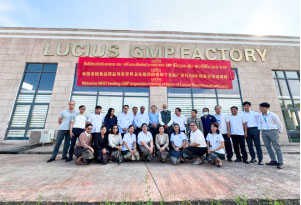
Lucius Pharmaceuticals (Lao) LTD. (Lucius Pharmaceuticals), with its manufacturing campus in Laos located in the capital city of Vientiane in 2020, officially begins its great journey to make effective and affordable medicines available to people in need around the world...More

Lucius Pharmaceutical Co., Ltd., was established in 2020 in Vientiane, the capital of Laos. It aims to offer safe, effective, and affordable medicines globally. With a factory spanning 25,000 square meters, the company manufactures 200+ generic drugs in diverse therapeutic fields.
Address: No.26 Thongmang village, Xaythany district, Vientiane Capital, Laos
E-mail:laoslucius@gmail.com

Name: Lucius

Telegram name: Vira
No.:0085253923643
Telegram name: Vira
No.:0085253923643