Your Health, We Care
Release date: 2025-02-17 09:59:38 Article From: Lucius Laos Recommended: 457
Cabozantinib is a multi-targeted tyrosine kinase inhibitor with a wide range of indications in clinical applications.
Cabozantinib plays an important role in the treatment of a variety of cancers, and understanding the populations for which it is adapted is critical to guide rational drug use.
Cabozantinib was first approved for the treatment of patients with advanced renal cell carcinoma who had failed prior anti-angiogenic therapy. These patients often face disease progression and limited treatment options, and cabozantinib offers them new hope for treatment.
For patients with locally advanced or metastatic medullary thyroid cancer, cabozantinib has also shown good efficacy. These patients often do not respond well to traditional treatments, and cabozantinib's multi-target inhibition can effectively control disease progression.
In specific cases, cabozantinib has also been used to treat patients with non-small cell lung cancer, especially those with advanced disease that carries specific gene mutations. Its multi-target nature allows it to inhibit the growth and metastasis of tumor cells to a certain extent.
The reason why cabozantinib can occupy a place in the treatment of a variety of cancers is due to its unique clinical application advantages.
Cabozantinib can simultaneously inhibit multiple tyrosine kinase targets associated with tumor growth and metastasis, thereby effectively blocking the signaling pathway of tumor cells and inhibiting their proliferation and invasion ability.
From advanced renal cell carcinoma to medullary thyroid cancer to non-small cell lung cancer, cabozantinib has a wide range of indications, providing more treatment options for patients with different types of cancer.
Although cabozantinib may cause some side effects, it is generally well tolerated. With appropriate dose adjustment and symptomatic treatment, patients are usually able to tolerate and continue treatment, resulting in a better survival benefit.
Conclusion: Cabozantinib is a multi-targeted tyrosine kinase inhibitor that plays an important role in the treatment of a variety of cancers. Understanding its suitable population and clinical application advantages will help us to select and use this drug more rationally, so as to bring better treatment outcomes and quality of life to patients.
On November 21, 2025, the U.S. Food and Drug Administration (FDA) approved the regimen of pembrolizu···【more】
Recommended:8472025-17-12
Lung cancer is the most rapidly increasing malignant tumor with the fastest increasing morbidity and···【more】
Recommended:10442024-09-07
Recently, Lao Lucius Pharmaceutical (Lucius Pharmaceuticals) issued a solemn statement regarding cou···【more】
Recommended:2762026-10-10
Lucius Pharmaceuticals Version of Vibegron Now Available1.Basic Drug InformationVibegron (generic na···【more】
Recommended:3972026-06-08
In recent years, leveraging the World Trade Organization (WTO) patent waiver for least-developed cou···【more】
Recommended:5872026-05-08
How Can Chinese Patients Access Generic Drugs from Laos?In recent years, generic drugs from Laos hav···【more】
Recommended:5512026-04-08
Lucius Pharmaceuticals version of Ibrutinib is now availableIn a randomized controlled trial of 269 ···【more】
Recommended:4432026-03-08
Leveraging the WTO patent waiver for least-developed countries (extended to 2033), Laos has seen rap···【more】
Recommended:6022026-31-07
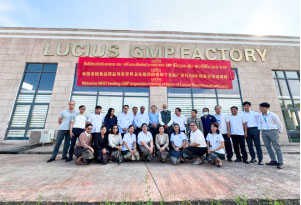
Lucius Pharmaceuticals (Lao) LTD. (Lucius Pharmaceuticals), with its manufacturing campus in Laos located in the capital city of Vientiane in 2020, officially begins its great journey to make effective and affordable medicines available to people in need around the world...More

Lucius Pharmaceutical Co., Ltd., was established in 2020 in Vientiane, the capital of Laos. It aims to offer safe, effective, and affordable medicines globally. With a factory spanning 25,000 square meters, the company manufactures 200+ generic drugs in diverse therapeutic fields.
Address: No.26 Thongmang village, Xaythany district, Vientiane Capital, Laos
E-mail:laoslucius@gmail.com

Name: Lucius

Telegram name: Vira
No.:0085253923643
Telegram name: Vira
No.:0085253923643