Your Health, We Care
Release date: 2026-01-20 16:29:03 Article From: Lucius Laos Recommended: 301
Ponatinib is an oral targeted drug specifically indicated for the treatment of chronic myeloid leukemia (CML) and Philadelphia chromosome-positive (Ph+) acute lymphoblastic leukemia (ALL). In December 2012, the U.S. Food and Drug Administration (FDA) approved the drug as a candidate therapy. However, due to the risk of life-threatening blood clots and severe vascular stenosis, its marketing was suspended on October 31, 2013.
Ponatinib acts as an oral tyrosine kinase inhibitor, which can be administered to leukemia patients with either mutated or unmutated BCR-ABL genes. This includes patients harboring the BCR-ABL T315I mutation (threonine-to-isoleucine substitution at position 315) who have developed resistance to other tyrosine kinase inhibitors. To evaluate the efficacy of ponatinib in patients with CML or Ph-positive ALL, J.E. Cortes et al. from The University of Texas MD Anderson Cancer Center in Houston conducted a phase 2 clinical study.
The study enrolled 449 patients with CML or Ph-positive ALL who were either resistant or intolerant to dasatinib or nilotinib, or carried the BCR-ABL T315I mutation. All patients received ponatinib at an initial daily dose of 45 mg, with a median follow-up duration of 15 months.
56% achieved major cytogenetic response (51% in the dasatinib/nilotinib-resistant or intolerant subgroup, and 70% in the T315I-mutant subgroup).
46% achieved complete cytogenetic response (40% and 66% in the two subgroups, respectively).
34% achieved major molecular response (27% and 56% in the two subgroups, respectively).
The disease responses were independent of the baseline BCR-ABL kinase domain mutation status and highly durable, with approximately 91% of patients maintaining major cytogenetic response for more than 12 months. No single-site BCR-ABL mutation associated with ponatinib resistance was detected.
55% achieved major hematologic response and 39% achieved major cytogenetic response.
31% achieved major hematologic response and 23% achieved major cytogenetic response.
41% achieved major hematologic response and 47% achieved major cytogenetic response.
The most common adverse events included thrombocytopenia (37%), rash (34%), xeroderma (32%), and abdominal pain (22%). Severe arterial thrombotic events occurred in 9% of patients, with 3% of these events considered treatment-related. A total of 12% of patients discontinued treatment due to adverse events.
The above is the latest information regarding the question "Can Ponatinib Be Used to Treat Lymphocytic Leukemia?" For more detailed information about ponatinib, please contact our pharmacists directly.
On November 21, 2025, the U.S. Food and Drug Administration (FDA) approved the regimen of pembrolizu···【more】
Recommended:8462025-17-12
Lung cancer is the most rapidly increasing malignant tumor with the fastest increasing morbidity and···【more】
Recommended:10442024-09-07
Recently, Lao Lucius Pharmaceutical (Lucius Pharmaceuticals) issued a solemn statement regarding cou···【more】
Recommended:2742026-10-10
Lucius Pharmaceuticals Version of Vibegron Now Available1.Basic Drug InformationVibegron (generic na···【more】
Recommended:3952026-06-08
In recent years, leveraging the World Trade Organization (WTO) patent waiver for least-developed cou···【more】
Recommended:5862026-05-08
How Can Chinese Patients Access Generic Drugs from Laos?In recent years, generic drugs from Laos hav···【more】
Recommended:5512026-04-08
Lucius Pharmaceuticals version of Ibrutinib is now availableIn a randomized controlled trial of 269 ···【more】
Recommended:4422026-03-08
Leveraging the WTO patent waiver for least-developed countries (extended to 2033), Laos has seen rap···【more】
Recommended:6012026-31-07
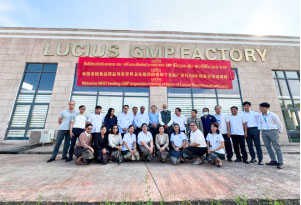
Lucius Pharmaceuticals (Lao) LTD. (Lucius Pharmaceuticals), with its manufacturing campus in Laos located in the capital city of Vientiane in 2020, officially begins its great journey to make effective and affordable medicines available to people in need around the world...More

Lucius Pharmaceutical Co., Ltd., was established in 2020 in Vientiane, the capital of Laos. It aims to offer safe, effective, and affordable medicines globally. With a factory spanning 25,000 square meters, the company manufactures 200+ generic drugs in diverse therapeutic fields.
Address: No.26 Thongmang village, Xaythany district, Vientiane Capital, Laos
E-mail:laoslucius@gmail.com

Name: Lucius

Telegram name: Vira
No.:0085253923643
Telegram name: Vira
No.:0085253923643