Your Health, We Care
Release date: 2025-12-15 15:09:05 Article From: Lucius Laos Recommended: 304
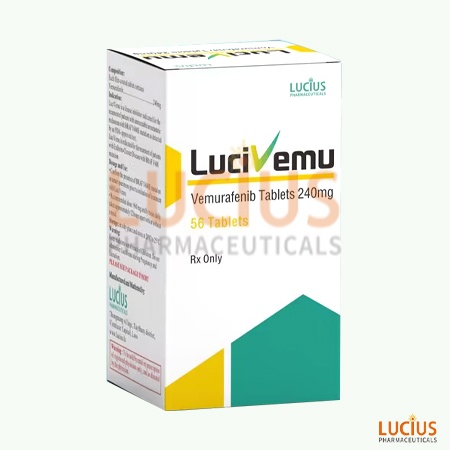
Vemurafenib is a kinase inhibitor indicated for the treatment of patients with unresectable or metastatic melanoma with BRAF V600E mutation detected by a test approved by the U.S. Food and Drug Administration.
Vemurafenib is indicated for the treatment of patients with Erdheim-Chester disease (ECD) harboring BRAF V600 mutations.
Use Limitations: Vemurafenib is not indicated for the treatment of patients with wild-type BRAF melanoma.
Confirm the presence of BRAF V600E mutation in tumor samples before initiating vemurafenib treatment.
Recommended Dose: 960 mg orally twice daily, approximately 12 hours apart, with or without food.
Lactating Women: Discontinue breastfeeding during treatment with ZELBORAF.
New Primary Cutaneous Malignancies: Perform dermatologic evaluations before initiating treatment, every 2 months during treatment, and for up to 6 months after discontinuing vemurafenib. Treatment may be continued after resection without dose adjustment.
New Non-Cutaneous Squamous Cell Carcinomas: Periodically assess for signs or clinical symptoms of new non-cutaneous squamous cell carcinomas before and during treatment.
Other Malignancies: Closely monitor patients receiving vemurafenib for signs or symptoms of other malignancies.
Tumor Promotion in Wild-Type BRAF Melanoma: BRAF inhibitors may increase cell proliferation.
Severe Hypersensitivity Reactions, Including Anaphylaxis and Drug Reaction with Eosinophilia and Systemic Symptoms (DRESS Syndrome): Discontinue vemurafenib in case of severe hypersensitivity reactions.
Severe Dermatologic Reactions, Including Stevens-Johnson Syndrome (SJS) and Toxic Epidermal Necrolysis (TEN): Discontinue vemurafenib in patients with severe dermatologic reactions.
QT Interval Prolongation: Monitor electrocardiograms (ECGs) and electrolytes before and during treatment. Hold vemurafenib if QTc interval is ≥500 ms. Correct electrolyte abnormalities and control cardiac risk factors for QT interval prolongation.
Hepatotoxicity: Measure liver enzymes and bilirubin before initiating vemurafenib treatment and monitor monthly during treatment.
Photosensitivity: Advise patients to avoid sun exposure.
Severe Ocular Reactions: Monitor for signs and symptoms of uveitis.
Embryo-Fetal Toxicity: May cause fetal harm. Inform females of potential fetal risk and advise use of effective contraception.
Radiation Sensitization and Radiation Recall: Severe cases have been reported.
Renal Failure: Measure serum creatinine before initiating vemurafenib and monitor periodically during treatment.
Dupuytren's Contracture and Plantar Fascial Fibromatosis: Manage events by dose reduction, treatment interruption, or treatment discontinuation.
Avoid concomitant administration of vemurafenib with strong CYP3A4 inhibitors or inducers.
CYP1A2 Substrates: Vemurafenib may increase the concentrations of CYP1A2 substrates. Avoid concomitant use of vemurafenib and CYP1A2 substrates with a narrow therapeutic window. If co-administration is unavoidable, closely monitor for toxicities and consider reducing the dose of the CYP1A2 substrate.
Melanoma: The most common adverse reactions (≥30%) are arthralgia, rash, alopecia, fatigue, photosensitivity reaction, nausea, pruritus, and cutaneous papilloma.
Erdheim-Chester Disease: The most common adverse reactions (>50%) are arthralgia, rash, maculopapular rash, alopecia, fatigue, QT interval prolongation on electrocardiogram, and cutaneous papilloma.
Not established.
Tablets.
Store at 20°C to 25°C (68°F to 77°F); excursions permitted between 15°C and 30°C (59°F and 86°F) for short-distance transportation.
On November 21, 2025, the U.S. Food and Drug Administration (FDA) approved the regimen of pembrolizu···【more】
Recommended:8472025-17-12
Lung cancer is the most rapidly increasing malignant tumor with the fastest increasing morbidity and···【more】
Recommended:10442024-09-07
Recently, Lao Lucius Pharmaceutical (Lucius Pharmaceuticals) issued a solemn statement regarding cou···【more】
Recommended:2762026-10-10
Lucius Pharmaceuticals Version of Vibegron Now Available1.Basic Drug InformationVibegron (generic na···【more】
Recommended:3972026-06-08
In recent years, leveraging the World Trade Organization (WTO) patent waiver for least-developed cou···【more】
Recommended:5872026-05-08
How Can Chinese Patients Access Generic Drugs from Laos?In recent years, generic drugs from Laos hav···【more】
Recommended:5512026-04-08
Lucius Pharmaceuticals version of Ibrutinib is now availableIn a randomized controlled trial of 269 ···【more】
Recommended:4432026-03-08
Leveraging the WTO patent waiver for least-developed countries (extended to 2033), Laos has seen rap···【more】
Recommended:6022026-31-07

Lucius Pharmaceuticals (Lao) LTD. (Lucius Pharmaceuticals), with its manufacturing campus in Laos located in the capital city of Vientiane in 2020, officially begins its great journey to make effective and affordable medicines available to people in need around the world...More

Lucius Pharmaceutical Co., Ltd., was established in 2020 in Vientiane, the capital of Laos. It aims to offer safe, effective, and affordable medicines globally. With a factory spanning 25,000 square meters, the company manufactures 200+ generic drugs in diverse therapeutic fields.
Address: No.26 Thongmang village, Xaythany district, Vientiane Capital, Laos
E-mail:laoslucius@gmail.com

Name: Lucius

Telegram name: Vira
No.:0085253923643
Telegram name: Vira
No.:0085253923643